The Single Strategy To Use For Framing Streets
Table of ContentsFascination About Framing StreetsMore About Framing StreetsAn Unbiased View of Framing Streets4 Easy Facts About Framing Streets ExplainedThe 10-Minute Rule for Framing StreetsMore About Framing Streets
, typically with the purpose of catching photos at a decisive or emotional moment by mindful framing and timing. https://triberr.com/framingstreets1.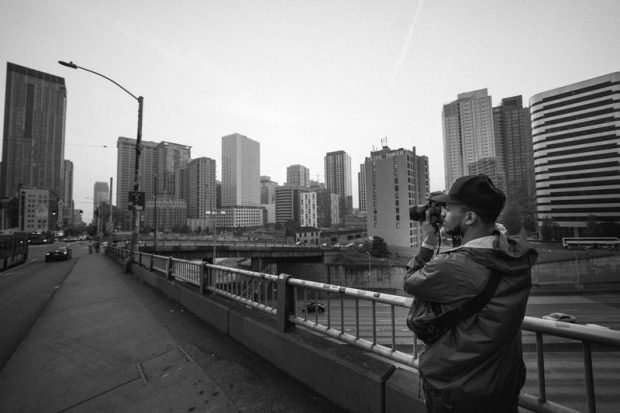
Not known Details About Framing Streets
Susan Sontag, 1977 Street digital photography can focus on people and their actions in public. In this respect, the street professional photographer is comparable to social docudrama professional photographers or photographers that additionally work in public locations, however with the purpose of recording newsworthy events. Any of these digital photographers' images may capture individuals and home noticeable within or from public places, which typically involves browsing honest concerns and regulations of personal privacy, security, and residential or commercial property.
Depictions of day-to-day public life develop a genre in almost every duration of world art, beginning in the pre-historic, Sumerian, Egyptian and very early Buddhist art periods. Art dealing with the life of the road, whether within views of cityscapes, or as the dominant concept, shows up in the West in the canon of the Northern Renaissance, Baroque, Rococo, of Romanticism, Realism, Impressionism and Post-Impressionism.
Our Framing Streets Ideas
Louis Daguerre: "Boulevard du Holy place" (1838 or 1839) In 1838 or 1839 the initial photo of numbers in the street was videotaped by Louis-Jacques-Mand Daguerre in one of a set of daguerreotype sights taken from his workshop window of the Blvd du Holy place in Paris. The second, made at the height of the day, reveals an unpopulated stretch of road, while the other was taken at concerning 8:00 am, and as Beaumont Newhall reports, "The Boulevard, so frequently loaded with a moving bunch of pedestrians and carriages was completely solitary, except an individual who was having his boots combed.
, who was influenced to carry out a similar documents of New York City. As the city established, Atget aided to advertise Parisian roads as a worthwhile topic for digital photography.

Not known Facts About Framing Streets
Martin is the very first tape-recorded professional photographer to do so in London with a disguised video camera. Mass-Observation was a social study organisation established in 1937 which intended to videotape everyday life in Britain and to tape-record the responses of the 'man-in-the-street' to King Edward VIII's abdication in 1936 to marry divorce Wallis Simpson, and the sequence of George VI. The principal Mass-Observationists were anthropologist Tom Harrisson in Bolton and poet Charles Madge in London, and their first report was created as the publication "May the Twelfth: Mass-Observation sites Day-Surveys 1937 by over two hundred onlookers" [] Home window cleaner at Kottbusser Tor, Berlin, by Elsa Thiemann c. 1946 The post-war French Humanist College photographers found their subjects on the street or in the restaurant. Andre Kertesz.'s extensively appreciated Images la Sauvette (1952) (the English-language version was entitled The Definitive Moment) promoted the concept of taking an image at what he labelled the "crucial minute"; "when type and content, vision and composition combined right into a transcendent whole" - Street photography hashtags.
The Single Strategy To Use For Framing Streets
The recording maker was 'a covert camera', a 35 mm Contax hidden below his layer, that was 'strapped to the breast and attached to a long cord strung down the ideal sleeve'. His job had little modern influence as due to Evans' level of sensitivities about the originality of his project and the personal privacy of his topics, it was not published up until 1966, in the book Many Are Called, with an introduction created by James Agee in 1940.
Helen Levitt, after that a teacher of young youngsters, associated with Evans in 193839. She recorded the transitory chalk drawings - Lightroom presets that were component of youngsters's street culture in New york city at the time, as well as the youngsters who made them. In July 1939, Mo, MA's brand-new digital photography section consisted of Levitt's job in its inaugural exhibitRobert Frank's 1958 publication,, was substantial; raw and commonly out of emphasis, Frank's photos examined conventional photography of the time, "challenged all the official rules laid down by Henri Cartier-Bresson and Walker Evans" and "flew in the face of the wholesome pictorialism and heartfelt photojournalism of American magazines like LIFE and Time".